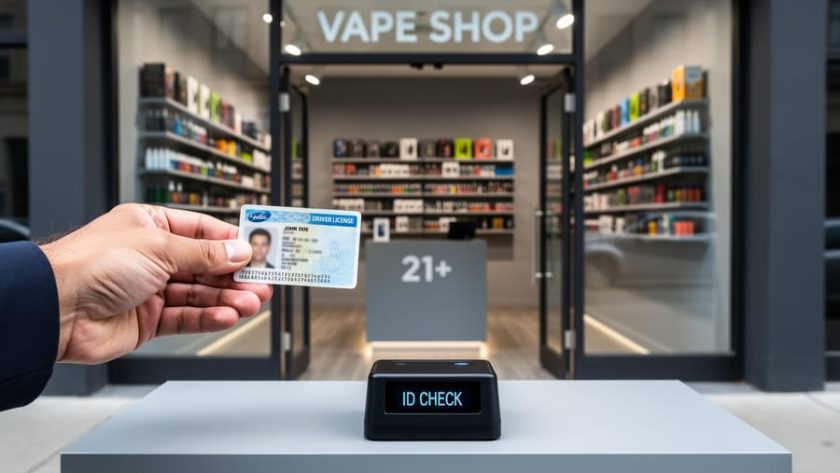
The federal rule is simple: you must be 21 to buy any tobacco product, e-cigarettes and vapes included, and no retailer in the country can legally sell to you otherwise. That’s been true since December 20, 2019, when the Tobacco 21 law took effect immediately and raised the minimum age from 18. There are no exceptions for particular stores or situations.
Retailers have extra obligations, too. Since September 30, 2024, an FDA final rule has required a photo ID check for anyone who looks under 30, and it bars vending machine sales anywhere people under 21 are allowed to enter.
Here’s where it gets less tidy. Federal law is the floor, not the whole picture. States and cities can add their own layers on top, including rules on flavors, licensing, and taxes, and those vary widely and change often. Rather than hand you a list that could be stale by the time you read it, this guide covers what’s firmly established at the federal level, explains why the rules exist, and shows you how to check what applies where you live.
Key Details at a Glance: Federal Vaping Rules
Federal vaping rules can feel like a maze, so here’s the short version. These are the verified federal facts, in the order they happened.
| Rule or Action | Date | What It Means for Buyers and Retailers |
|---|---|---|
| Tobacco 21 legislation | December 20, 2019 | The federal minimum age for tobacco products rose from 18 to 21. It applies to all retail establishments and persons, with no exceptions. |
| FDA final rule on sales to people under 21 | August 2024 | The FDA issued “Prohibition of Sale of Tobacco Products to Persons Younger than 21 Years of Age.” |
| Photo ID requirement | Beginning September 30, 2024 | Retailers must check photo ID for anyone under 30 buying cigarettes, smokeless tobacco and covered tobacco products. |
| Vending machine restriction | Beginning September 30, 2024 | Retailers may not sell these products through vending machines in facilities where people under 21 are present or allowed to enter at any time. |
| Flavored e-cigarette authorizations | May 2026 | The FDA authorized four flavored e-cigarettes for sale. |
The 2019 law took effect immediately. Since December 20, 2019, it has been illegal for a retailer to sell any tobacco product, e-cigarettes included, to anyone under 21.
The 2024 rule added enforcement details on top of that age limit. The photo ID check applies to shoppers under 30, which is why a buyer well past 21 can still get carded. The vending machine limit is tied to the facility, not the buyer.
The May 2026 authorization covers four specific flavored e-cigarettes. It doesn’t mean flavored products as a whole are legal to sell.
This list covers federal rules only. State and local requirements, including taxes and any flavor restrictions, are separate, and we’ll show you how to check them later in this article.
How Vaping Is Regulated: The Basics
In the US, vaping products are regulated as tobacco products. That’s true even when the e-liquid contains no tobacco leaf, and it’s the reason the FDA has a say in how they’re made, marketed, and sold. If you’re curious how the health picture compares, our look at vaping vs smoking covers it, and this safety differences breakdown goes a bit further.
Two sources of rules matter here, and they work differently.
A law is passed by Congress. The 2019 Tobacco 21 legislation is a good example: it amended the Federal Food, Drug, and Cosmetic Act and raised the federal minimum age for sale to 21.
A rule is issued by an agency like the FDA, using authority Congress has already given it. A final rule is the agency’s finished, official version of a regulation, published after the proposal stage. The FDA’s August 2024 final rule on sales to people under 21 is one.
Both matter because laws set the big requirements, while rules spell out how they work day to day, like how retailers must check IDs.
A few terms are worth knowing. An e-cigarette is a battery-powered device that heats liquid into an inhalable vapor. A covered tobacco product is a category used in FDA rules for products the agency regulates beyond cigarettes and smokeless tobacco.
The Federal Minimum Age Is 21
What Changed in December 2019
On December 20, 2019, the President signed legislation amending the Federal Food, Drug, and Cosmetic Act and raising the federal minimum age for buying tobacco products from 18 to 21. There was no phase-in period, either. Tobacco 21 took effect immediately, so retailers had to adjust overnight.
For stores, the change was simple but firm: since that date, it has been illegal to sell any tobacco product, including e-cigarettes, to anyone under 21. For buyers, it meant that 18-, 19-, and 20-year-olds who could previously purchase vapes at the counter no longer could, anywhere in the country.
No Exceptions for Retailers
The federal age requirement has no built-in loopholes for retailers. The law applies to all retail establishments and persons, so it doesn’t matter whether a shop is a big chain, a corner store, or a specialty vape shop. Every one of them is covered, and none gets a carve-out based on size, location, or the type of business it runs.
Since December 20, 2019, it has been illegal for a retailer to sell any tobacco product, including e-cigarettes, to anyone under 21. That includes selling to someone who is 18, 19, or 20. There is no federal exception for those groups, and the rule took effect the moment the legislation was signed.
The FDA’s 2024 Final Rule: Photo ID and Vending Machines
Why You Might Get Carded at 28
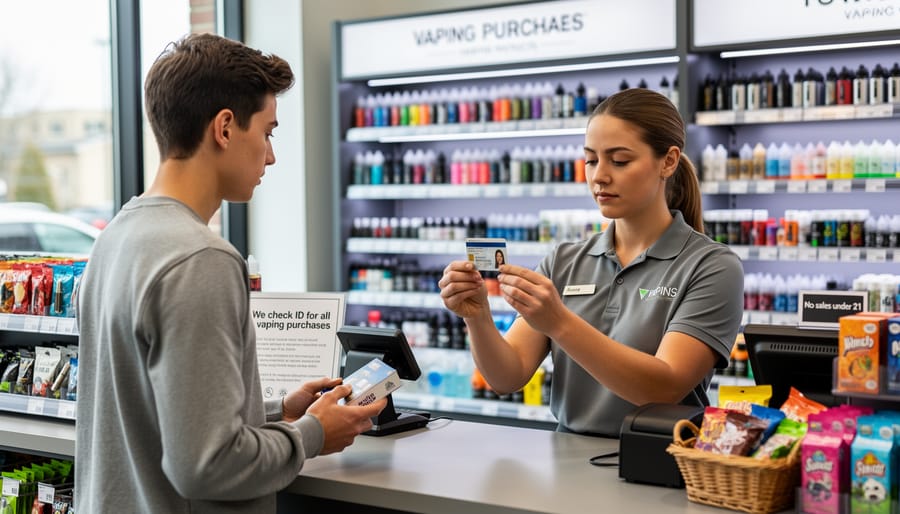
If you’ve ever been asked for ID at the counter well into your twenties, this is why. Since September 30, 2024, retailers have had to check a photo ID for anyone under 30 who’s trying to buy cigarettes, smokeless tobacco, or other covered tobacco products. That covers a much wider group than just people who look underage.
The reasoning is simple. The legal age is 21, and guessing someone’s age by eye is unreliable. A 22-year-old and a 19-year-old can look nearly identical across a counter. Setting the checking threshold at 30 builds in a wide margin, so clerks don’t have to make that judgment call.
So if you get carded at 28, it isn’t personal or a sign of suspicion. It’s the standard procedure, and the store is following federal rules.
Where Vending Machines Are Off the Table
Vending machines used to be an easy way to pick up tobacco without talking to anyone. Federal rules have closed that door in many places.
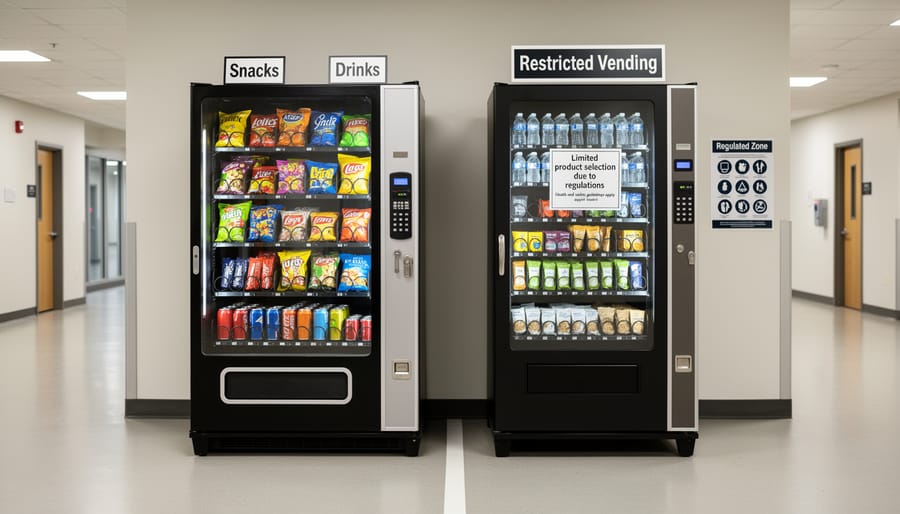
Since September 30, 2024, retailers can’t sell cigarettes, smokeless tobacco, or covered tobacco products through a vending machine if the facility lets anyone under 21 in. The key phrase is “present or permitted to enter at any time.” It doesn’t matter whether a minor is standing there when you walk by. If under-21 individuals are allowed inside at any point, the machine is off limits for these products.
The logic is simple. A machine can’t check a photo ID or read a customer’s face, so it can’t reliably tell a 20-year-old from a 25-year-old. Pulling machines out of spaces open to younger people keeps that gap from becoming a loophole. This is why you’re far more likely to deal with a live clerk when you buy.
Flavored E-Cigarettes and FDA Authorization
Flavors are where a lot of the confusion about vaping rules lives, so it helps to separate what’s confirmed from what isn’t. In May 2026, the FDA authorized four flavored e-cigarettes for sale. That’s a notable development, and it tells us the agency is willing to authorize certain flavored products.
So what does authorization actually mean? In general terms, the FDA reviews a specific tobacco product and decides whether it can be legally marketed in the US. The decision attaches to that product, not to a category of products. One flavored e-cigarette getting the green light says nothing about every other flavored device or liquid on the shelf.
That distinction matters for shoppers. Plenty of flavored products exist, but only those that are lawfully marketed can be sold legally. A tempting flavor on a store counter or website doesn’t prove it has FDA authorization.
This article won’t speculate about which products were authorized or what else may be pending, since those details aren’t something we can verify here. For current specifics, official FDA resources are the place to look.
When in doubt, check whether a specific product is actually cleared for sale rather than assuming a flavor’s availability means it’s allowed.
Why State and Local Rules Still Matter
Federal law sets the baseline, but it isn’t always the final word. States and local governments can add their own requirements on top of it. Depending on where you live, that might mean extra taxes, retailer licensing, or limits on what can be sold and where. Two people buying the same product in different places can face quite different rules.
That’s why it pays to check locally instead of relying on a general summary, this one included. Details like state taxes, licensing rules, and flavor restrictions vary widely and change over time, so confirm them with an official source rather than a secondhand one. Your state health department’s website is a good starting point, along with your state government’s official pages on tobacco and vapor products. Many cities and counties also publish their own ordinances, so a quick look at your local government’s website is worthwhile.
The same goes if you’re curious about other vaping products. Hemp-derived options, for example, can fall under different rules than nicotine ones, and local requirements may apply. If you’re researching how to vape CBD or reading up on CBD vaping effects, check what applies in your area before you buy.
Common Questions About Vaping Laws
If you’re still unsure about the basics, these short answers cover the questions readers ask most.
What’s the legal age to buy vapes?
The federal minimum age is 21. Since December 20, 2019, it has been illegal for a retailer to sell any tobacco product, including e-cigarettes, to anyone under 21.
Is it legal for a store to sell to an 18-year-old?
No. The federal minimum age of sale applies to all retail establishments and persons with no exceptions, so a retailer can’t legally make that sale.
Why was I asked for ID when I look well over 21?
Since September 30, 2024, retailers must use a photo ID to verify the age of anyone under 30 buying covered tobacco products. It’s a routine requirement, not a judgment about how old you look.
Can I buy from a vending machine?
Not in facilities where people under 21 are present or allowed to enter at any time. Retailers can’t sell covered tobacco products through vending machines in those locations.
A couple of details fall outside what we can state with confidence here. Your state or city may add its own requirements on top of the federal rules, and we haven’t covered specific local flavor restrictions, taxes, or sale conditions. For those, check your state health department or official state government website, and confirm the details before you buy.
The big picture comes down to a few points. Federally, you must be 21 to buy any tobacco product, e-cigarettes included, and that applies to every retailer with no exceptions. Since September 30, 2024, stores have also had to check photo ID for anyone under 30 and can’t sell through vending machines where people under 21 are allowed to enter. On flavors, the FDA’s authorization process decides which products can legally be sold, and the May 2026 approval of four flavored e-cigarettes doesn’t open the door for every flavored product.
State and local rules can add more on top of all this, and they differ from place to place. Before you buy, check your state or local government’s official resources, and keep an eye on the FDA’s own announcements for changes.