Vaping CBD for anxiety involves inhaling cannabidiol through a vaporizer or vape pen, a method that appeals to users seeking faster relief than traditional oral supplements can provide. While research on CBD’s anti-anxiety effects remains ongoing and the FDA hasn’t approved CBD vape products for anxiety treatment, anecdotal reports and preliminary studies suggest some people experience calming effects within minutes of inhalation. The practice requires attention to product quality, dosing precision, and awareness of potential respiratory risks that come with any form of vaping.
If you’re considering CBD vaping specifically for anxiety management, you’re likely weighing it against other delivery methods and wondering whether the speed of onset justifies the unknowns around lung safety. Here’s what matters: vaping allows CBD to enter your bloodstream through the lungs rather than passing through your digestive system, which supporters claim produces quicker effects. However, the long-term safety profile of inhaling vaporized CBD oil remains under-researched, and quality control across the industry varies dramatically.
This guide walks through the practical steps for trying CBD vaping responsibly, from selecting third-party tested products and choosing appropriate devices to finding your effective dose and recognizing when it’s working or not working for you. We’ll cover what equipment you actually need, the safety precautions that aren’t optional, and how to evaluate your results honestly. The goal isn’t to make medical claims about CBD curing anxiety, but to give you the framework for an informed trial if you’ve decided to explore this option as part of a broader wellness approach. Realistic expectations matter here: CBD vaping isn’t pharmaceutical-grade anxiety medication, and what works for one person may do nothing for another.
Understanding CBD Vaping and Anxiety
CBD, short for cannabidiol, is one of over a hundred naturally occurring compounds found in cannabis plants. Unlike THC (tetrahydrocannabinol), CBD doesn’t produce a “high” or intoxicating effect. When you vape CBD, you’re inhaling an aerosol containing CBD molecules that enter your bloodstream through your lungs, which differs significantly from swallowing CBD oil or eating CBD-infused edibles that must pass through your digestive system first.
The appeal of vaping CBD specifically for anxiety comes down to two factors: speed and convenience. Inhalation allows CBD to reach your bloodstream more quickly than oral consumption, with users typically reporting noticeable effects within minutes rather than the 30 to 90 minutes required for edibles or tinctures. However, research suggests that inhaled CBD may not last as long in your system as CBD consumed orally, though individual experiences vary widely based on metabolism, body weight, and other factors.
Understanding how CBD might influence anxiety requires a brief look at your body’s endocannabinoid system, a network of receptors that helps regulate mood, stress response, sleep, and other functions. Think of this system as a communication network that helps maintain balance in your body. CBD interacts with these receptors, though scientists are still working to fully understand the mechanisms involved.
Current research on CBD and anxiety shows promise but remains preliminary. Some studies suggest CBD may help reduce anxiety in specific situations, like public speaking or social anxiety scenarios, while other research has produced mixed results. The challenge is that most existing studies involve small sample sizes, vary widely in methodology, and often use CBD doses or delivery methods different from typical consumer vaping products. Clinical trials are ongoing, but we don’t yet have robust, large-scale evidence confirming that vaping CBD effectively treats anxiety disorders.
What we do know is that many people report subjective improvements in their anxiety symptoms when using CBD, though the placebo effect likely plays a role in some cases. Individual brain chemistry varies enormously, which means your response to CBD vaping might differ completely from someone else’s experience, even using identical products and doses.
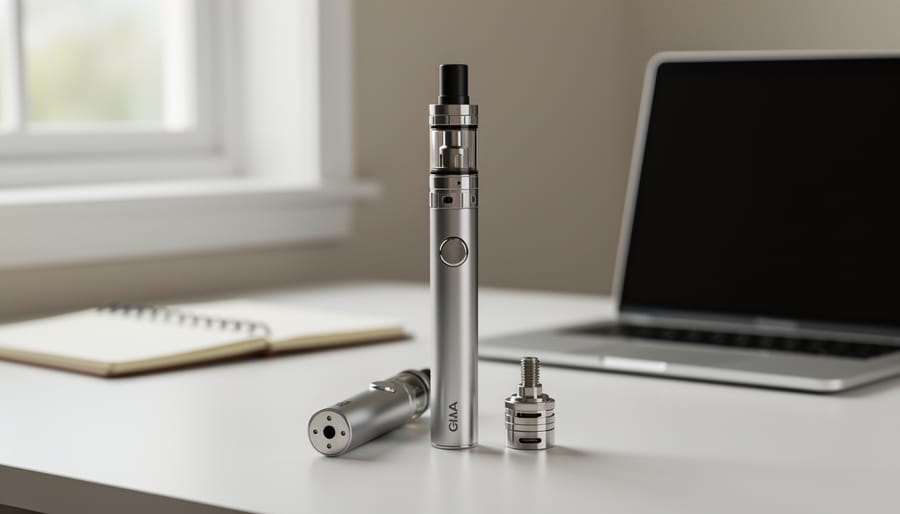
Tools and Materials You’ll Need
Choosing the Right CBD Vape Product
Selecting the right CBD vape product requires understanding three main formulation types. CBD isolate contains only cannabidiol with no other cannabis compounds, making it ideal if you’re concerned about THC traces or prefer a neutral flavor profile. Broad-spectrum CBD includes multiple beneficial cannabinoids and terpenes but has THC removed entirely. Full-spectrum CBD contains all naturally occurring compounds including up to 0.3% THC, which some users find enhances anxiety relief through what researchers call the entourage effect, though evidence remains preliminary.
Third-party lab testing is non-negotiable when selecting CBD vape products. Reputable manufacturers provide certificates of analysis from independent laboratories that verify CBD content, confirm THC levels, and test for contaminants like pesticides, heavy metals, and residual solvents. Read a certificate of analysis before purchasing any product; if a company doesn’t readily provide this documentation, shop elsewhere.
For CBD concentration, beginners should start with products containing 250-500mg CBD per 30ml bottle. This allows you to control intake while learning your personal response. Experienced users may opt for 1000mg or higher concentrations for stronger effects per puff, but higher strength doesn’t automatically mean better results for anxiety.
Look specifically for products labeled as vape juice, e-liquid, or vape oil formulated with vegetable glycerin and propylene glycol. These vape-safe bases allow proper vapor production. Avoid any product containing vitamin E acetate, which has been linked to serious respiratory illness. Quality CBD vape liquids should list all ingredients clearly, including the specific type of CBD extract and any added terpenes or flavorings used.
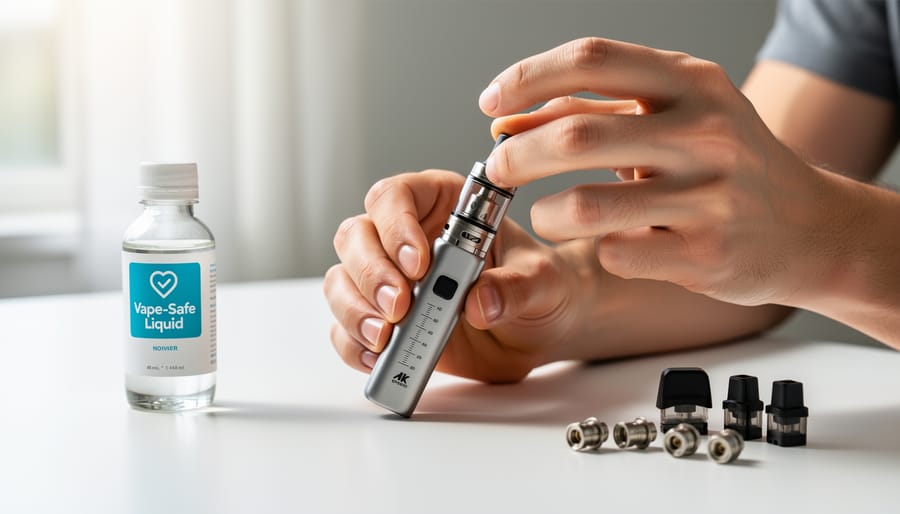
Device Compatibility and Settings
Not all vaping devices work equally well with CBD e-liquids, and using the wrong setup can waste product, damage your device, or create a harsh experience that defeats the purpose of trying CBD for anxiety relief.
Device types compatible with CBD e-liquids:
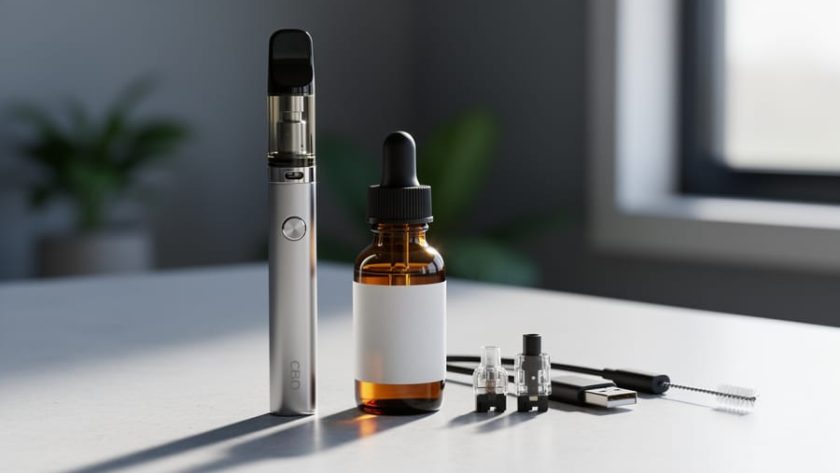
Most modern pod systems and vape pens handle CBD vape juice effectively, provided they’re designed for standard e-liquids rather than thick oils or concentrates. Refillable pod systems with adjustable airflow give you good control, while simple vape pens work fine if you’re keeping things straightforward. Sub-ohm tanks can work but often deliver more vapor than necessary for CBD use. Avoid devices marketed specifically for cannabis oils or THC concentrates, these aren’t designed for the thinner consistency of CBD e-liquids.
Why settings matter:
Temperature and wattage directly affect how CBD vaporizes and how the vapor feels. Too much heat can degrade CBD before you inhale it and create an unpleasant, harsh throat hit that increases anxiety rather than reducing it. Too little heat produces weak vapor and inefficient delivery. Getting the balance right makes the experience smoother and potentially more effective.
Recommended settings:
For CBD e-liquids, stay within 15-25 watts if your device has wattage adjustment, or use medium voltage settings on simpler devices. Temperature-control devices work well at 350-400°F (175-205°C). These ranges vaporize CBD without burning it, producing smooth vapor that’s easier on your throat and lungs. Start at the lower end and adjust upward only if vapor production feels insufficient, there’s no benefit to creating massive clouds when the goal is managing anxiety.
Safety Precautions Before You Start
CBD vaping carries specific risks and considerations that you need to understand before your first puff. This section covers essential safety information that could prevent serious health complications or legal issues.
First, consult your healthcare provider before vaping CBD if you take prescription medications. CBD may interact via CYP enzymes with blood thinners, antidepressants, seizure medications, and other drugs metabolized through the same liver pathways. Even over-the-counter medications or supplements can interact unpredictably with CBD.
CBD vaping isn’t appropriate for everyone. Avoid it entirely if you’re pregnant or breastfeeding, as research on CBD’s effects during these periods remains insufficient. Those with respiratory conditions like asthma or COPD should skip vaping altogether and explore other CBD delivery methods. If you have liver disease, heart conditions, or weakened immune function, medical supervision is necessary before trying CBD products.
Quality verification isn’t optional. Only purchase CBD vape products from reputable vendors who provide third-party lab results (certificates of analysis) for each batch. These reports should confirm CBD concentration, verify the absence of THC above legal limits, and screen for contaminants like pesticides, heavy metals, and residual solvents. Products without accessible lab testing pose unknown risks.
Check the ingredients list carefully. Never use CBD oil, tinctures, or products containing vitamin E acetate in a vape device. These substances weren’t formulated for inhalation and have caused serious lung injuries. Your vape liquid should contain only CBD extract, vegetable glycerin, propylene glycol, and approved flavourings.
Regarding legal considerations in 2026, hemp-derived CBD products containing less than 0.3% THC remain federally legal in most jurisdictions, but state and local laws vary considerably. Some regions restrict all vaping products regardless of content, while others maintain specific CBD regulations. Verify your local laws before purchasing, and never travel across borders with vape products without checking destination regulations.
Start with a clear baseline. If you’re experiencing severe anxiety, panic attacks, or suicidal thoughts, seek professional mental health support rather than self-medicating with CBD. Vaping CBD might complement existing treatment but shouldn’t replace professional care for diagnosed anxiety disorders.
Step-by-Step: How to Vape CBD for Anxiety
Dosing Guidance for Beginners
Start with the lowest CBD concentration you can find, typically 100mg to 300mg per 30ml bottle. This translates to roughly 3mg to 10mg of CBD per millilitre, which gives you room to gauge your body’s response without overdoing it. Take a single puff, then wait at least 15 to 30 minutes before considering another. You’ll likely notice effects within minutes if CBD vaping works for you, but rushing into multiple puffs increases the chance of side effects like drowsiness or lightheadedness without necessarily improving anxiety relief.
Your response to CBD is highly individual. Factors like body weight, metabolism, prior cannabis exposure, and the nature of your anxiety all influence how you’ll react. Some people find 5mg effective; others need 20mg or more. There’s no universal “correct” dose, which is why the gradual approach matters.
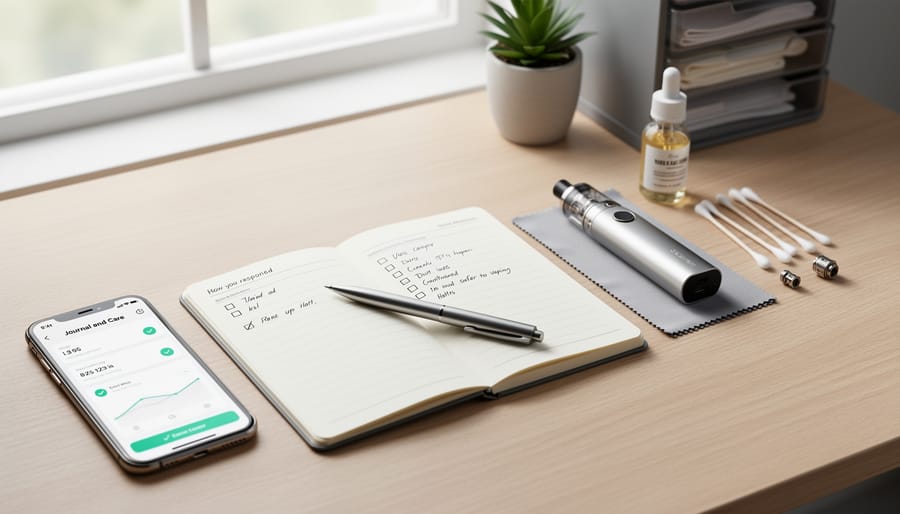
Keep a simple log: note the date, time, product, number of puffs, and how you felt in the hour afterward. After three to five sessions, patterns emerge, you’ll see whether a certain concentration helps, does nothing, or makes you too tired. Adjust from there, increasing by small increments (one or two additional puffs, or moving up to the next concentration tier) rather than doubling your intake.
If you’re not noticing any effect after a week of consistent use at low doses, consider whether the product is genuinely high-quality or if vaping is the right method for you. Patience and honest self-assessment beat guesswork every time.
Proper Inhalation Technique
The way you inhale CBD vapor significantly affects your experience and the potential benefits you might notice. For CBD vaping, mouth-to-lung (MTL) inhalation is generally recommended over direct-lung (DL) hits, especially if you’re new to vaping or using CBD for anxiety management.
With MTL inhalation, you draw vapor into your mouth first, hold it briefly, then inhale it into your lungs, similar to how you’d smoke a cigarette. This method gives you better control over your intake and tends to be gentler on your throat and lungs. Direct-lung inhalation, where you inhale vapor straight into your lungs like taking a deep breath, delivers a larger volume of vapor at once but can feel harsh and may lead to taking more CBD than you intended.
For optimal technique, take a slow, steady draw lasting about three to five seconds. Don’t rush it. After drawing the vapor into your mouth, pause for a moment, then inhale it into your lungs and hold for two to three seconds before exhaling. This gives the CBD time to absorb through the lung tissue. Wait at least a few minutes between puffs to gauge how you’re feeling before taking another.
Common mistakes include chain vaping, taking multiple puffs back-to-back without breaks, which can irritate your throat and lungs while making it difficult to assess your response. Another frequent error is setting your device’s wattage too high, which overheats the e-liquid, creates a burnt taste, and may degrade the CBD. Stick to your device’s recommended range (typically lower settings for CBD) and be patient between puffs.
Verification: How to Know If It’s Working
Figuring out whether CBD vaping is actually helping your anxiety requires honest self-assessment and patience. Don’t expect an immediate, dramatic shift; most people report subtle changes that become clearer over days or weeks of consistent use.
Start by establishing a baseline before you begin vaping CBD. Spend a few days noting your typical anxiety patterns: when symptoms appear, how intense they feel, and what triggers them. This gives you a reference point for comparison. Then, as you introduce CBD into your routine, track specific indicators rather than relying on vague impressions.
Pay attention to these key signs:
- Physical tension in your shoulders, jaw, or chest throughout the day
- Frequency and intensity of racing or intrusive thoughts
- Sleep quality, including how easily you fall asleep and stay asleep
- Your overall ability to manage daily stressors without feeling overwhelmed
- Any unwanted effects like drowsiness, dry mouth, or changes in appetite
Keep a simple journal where you record when you vape, how much you use, and what you notice in the hours that follow. Write down both physical sensations and mental shifts. You might find that your heart rate slows slightly, your breathing deepens, or you can redirect anxious thoughts more easily. These small changes matter more than waiting for anxiety to disappear completely.
Realistically, CBD vaping isn’t a cure or a guaranteed solution. “Working” might mean you handle a stressful meeting without spiraling afterward, not that you never feel anxious again. If you’ve been consistent for two to three weeks without any noticeable benefit, or if your anxiety worsens, it’s time to reassess. Either adjust your approach with a different product or concentration, or accept that CBD vaping may not be the right tool for you. There’s no shame in discontinuing something that isn’t helping, effective anxiety management often requires trying multiple strategies before finding what fits.
Common Mistakes and How to Avoid Them
Many newcomers to CBD vaping sabotage their own experience through preventable mistakes. Here’s what typically goes wrong and how to steer clear.
Starting with High Concentrations
The most common error is choosing a strong CBD concentration right away, thinking more means better results. Beginners often grab 1000mg or higher e-liquids when their system has never processed vaped CBD before. This leads to coughing, throat irritation, and sometimes feeling drowsy or foggy. Start with 250-500mg concentrations instead. You can always take more puffs or upgrade later, but you can’t undo an uncomfortably strong first experience that might discourage continued use.
Buying Based on Price Alone
Cheap CBD vape products flood the market, but rock-bottom prices usually signal corner-cutting somewhere. Products without third-party lab testing might contain contaminants, incorrect CBD levels, or additives that shouldn’t be inhaled. The “deal” becomes expensive when you’re inhaling mystery ingredients. Always verify lab results before purchasing, even if it means spending a bit more.
Expecting Instant Pharmaceutical Results
Some people treat CBD vaping like taking a fast-acting medication and expect immediate, dramatic anxiety relief. When they don’t feel transformed within minutes, they either give up or drastically increase their intake. CBD works more subtly for most people. You might notice a gentle easing of tension rather than a light switch flipping off your anxiety. Give it time, track your patterns, and adjust expectations accordingly.
Ignoring Device Maintenance
A neglected vape device delivers inconsistent CBD doses and creates harsh, unpleasant vapor. Coils burn out, tanks accumulate residue, and battery connections corrode. Clean your device weekly, replace coils when flavor diminishes, and store everything properly. Good maintenance ensures you’re actually getting the CBD you think you’re inhaling.
Frequently Asked Questions
How soon before an anxiety-triggering situation should I vape CBD? Timing varies widely between individuals, but many users report feeling initial calming effects within 5 to 15 minutes of inhalation. If you’re facing a known stressor such as public speaking or travel, consider testing your personal response time during low-stakes situations first rather than relying on CBD during your first high-pressure event. Some people prefer using it 10 to 20 minutes before anticipated anxiety, while others find on-the-spot use more effective. Track what works for your body and schedule accordingly.
Can I use CBD vape products every day for ongoing anxiety management? Daily use is common among CBD users, though there’s limited long-term research on sustained vaping specifically. Many people incorporate CBD vaping into their daily wellness routine without reported issues, while others reserve it for acute anxiety episodes. If you’re considering regular use, start with once or twice daily and monitor how you feel over several weeks. Be aware that tolerance can develop over time, potentially requiring dosage adjustments. Discuss sustained use with a healthcare provider, especially if you’re managing diagnosed anxiety disorders or taking other medications.
Will CBD vaping show up on a drug test?
Most workplace drug tests screen for THC, not CBD, but full-spectrum CBD products contain trace THC that could theoretically trigger a positive result. If drug testing is a concern, choose CBD isolate or broad-spectrum products with zero THC and verify this through third-party lab reports.
How does vaping CBD compare to CBD oil or edibles?
Vaping typically produces faster onset than oils or edibles, with effects noticed within minutes rather than 30 to 90 minutes for oral products. However, vaping may not last as long, though individual experiences vary considerably and depend on factors like dosage, product quality, and personal metabolism.
Is CBD vaping legal where I live?
In most of the United States, hemp-derived CBD products containing less than 0.3% THC are federally legal as of 2026, but state and local laws vary. Some jurisdictions restrict vaping products generally or have specific CBD regulations, so verify your local laws before purchasing.
What if I don’t feel anything after vaping CBD?
CBD’s effects are often subtle rather than dramatic, and some people don’t notice significant changes, especially at lower doses. Try tracking your anxiety levels before and after use for several days, increase your dosage gradually if needed, and verify your product quality through lab reports.
How does CBD vaping fit with other anxiety management techniques? CBD works best as part of a comprehensive approach rather than a standalone solution. Many users combine vaping with established strategies like therapy, exercise, meditation, and prescription medications when appropriate. CBD should complement, not replace, professional treatment for anxiety disorders. If you’re in therapy or taking anti-anxiety medication, discuss CBD use with your provider to avoid interactions and ensure it aligns with your treatment plan. Some people find CBD most helpful during transitional periods when developing other coping skills, while others use it as one tool among many for long-term management.
Can I combine CBD vaping with caffeine or alcohol? Caffeine can exacerbate anxiety symptoms for some people, potentially counteracting CBD’s calming effects, so pay attention to how this combination affects you personally. Mixing CBD with alcohol isn’t well-studied, and both substances can cause drowsiness, so avoid this combination until you understand how each affects you separately. When in doubt, keep things simple while you’re learning your response patterns.
Vaping CBD for anxiety isn’t a magic solution, but for some adults, it’s become a useful part of their wellness toolkit in 2026. This guide has walked you through the practical steps: selecting quality, lab-tested products, setting up your device correctly, starting with low doses and adjusting gradually, and paying attention to how your body responds. The emphasis throughout has been on safety, informed choices, and realistic expectations.
Remember that what works brilliantly for one person might do little for another. CBD affects everyone differently, and anxiety itself varies widely in cause and severity. If you’re dealing with significant anxiety symptoms, this approach shouldn’t replace professional medical care. A qualified healthcare provider can assess your specific situation, discuss whether CBD makes sense alongside other treatments, and monitor for potential interactions with any medications you’re taking.
The legal landscape, product quality standards, and research into CBD continue evolving. Stay informed about regulations in your area, verify third-party testing results, and maintain your equipment properly. Think of CBD vaping as one option among many for managing stress and anxiety, not a standalone cure. Combine it with proven strategies like therapy, exercise, sleep hygiene, and social connection for a well-rounded approach.
If you decide to try it, start slowly, track your experience honestly, and adjust your approach based on results. Give yourself permission to stop if it’s not helping or if you experience unwanted effects. Your wellness journey is yours alone.