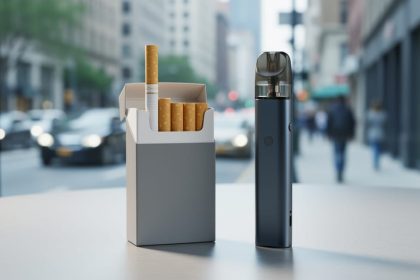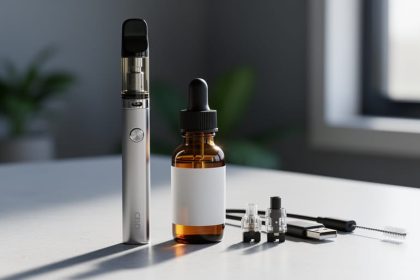

Based on current evidence, vaping is substantially less harmful than smoking cigarettes, though it’s not risk-free. Public Health England’s research, consistently updated through 2025, estimates vaping is around 95% less harmful than smoking, making it a significantly safer alternative for current smokers who would otherwise continue using traditional cigarettes.
The comparison isn’t straightforward because these products work differently and carry distinct risk profiles. Cigarette smoke contains over 7,000 chemicals, including at least 70 known carcinogens, while e-cigarette vapor contains far fewer toxic substances. That fundamental difference explains why major health organizations, including the Royal College of Physicians and Cancer Research UK, support vaping as a harm reduction tool for smokers unable to quit nicotine entirely.
For the roughly 28 million adult smokers in the United States, the question isn’t academic. Many want to reduce their health risks without going cold turkey, and understanding the real differences between these nicotine delivery systems can be lifesaving. This comparison cuts through the confusion by examining health impacts, addiction potential, secondhand exposure, cost, and social considerations backed by peer-reviewed research.
Neither option is ideal. Non-smokers and non-vapers should avoid both. But if you currently smoke and haven’t succeeded with FDA-approved cessation methods, the evidence suggests switching to vaping could dramatically lower your exposure to harmful chemicals while you work toward quitting nicotine completely. The key is making an informed choice based on facts rather than headlines or outdated assumptions.
At-a-Glance: Vaping vs. Smoking Cigarettes
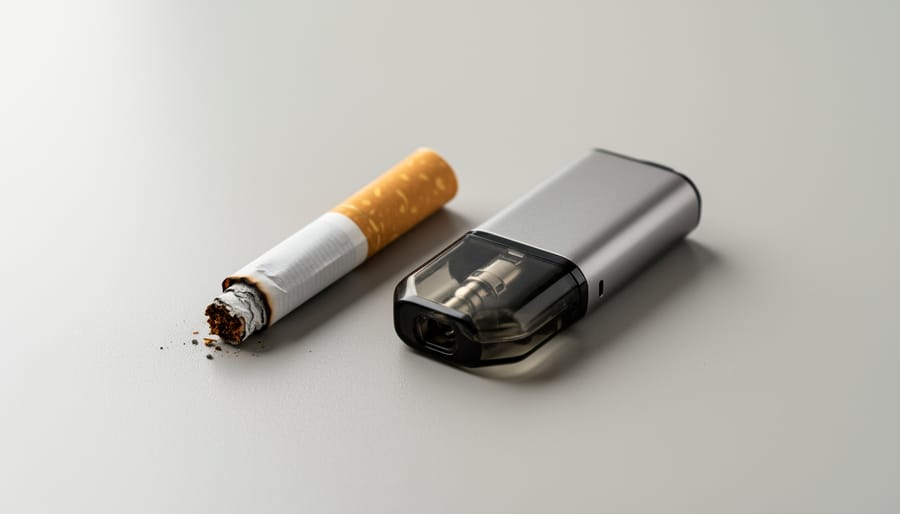
| Safety Factor | Vaping | Smoking Cigarettes |
|---|---|---|
| Harmful Chemicals | Significantly fewer; dozens versus thousands | 7,000+ chemicals, 70+ known carcinogens |
| Combustion Process | No combustion; heats liquid into vapor | Burns tobacco at high temperatures |
| Tar Exposure | None produced | Substantial tar deposits in lungs |
| Carbon Monoxide | Minimal to none | High levels with each cigarette |
| Secondhand Exposure | Lower chemical concentration in exhaled vapor | Proven harmful to bystanders |
| Addiction Potential | Delivers nicotine; addictive | Delivers nicotine; highly addictive |
The fundamental difference between vaping and smoking lies in how nicotine gets delivered. Vaping heats liquid to create an aerosol, while smoking burns tobacco through combustion. That distinction drives most of the safety differences outlined above.
Current research from public health organizations, including Public Health England and the Royal College of Physicians, indicates vaping is substantially less harmful than smoking traditional cigarettes. The absence of combustion eliminates the production of tar and drastically reduces exposure to cancer-causing chemicals and toxic gases like carbon monoxide.
However, substantially less harmful does not mean harmless. E-cigarettes still deliver nicotine, which remains addictive regardless of the delivery method. They also contain other chemicals that warrant ongoing study, particularly regarding long-term effects.
The regulatory landscape continues evolving as health authorities balance harm reduction for current smokers against preventing youth uptake. Both products face age restrictions and various usage limitations, though specific regulations vary by jurisdiction.
This quick comparison provides the foundation for understanding the safety trade-offs. The sections that follow will examine each dimension in detail, exploring what the research actually shows and what remains uncertain.
Understanding What You’re Comparing
What Is Vaping?
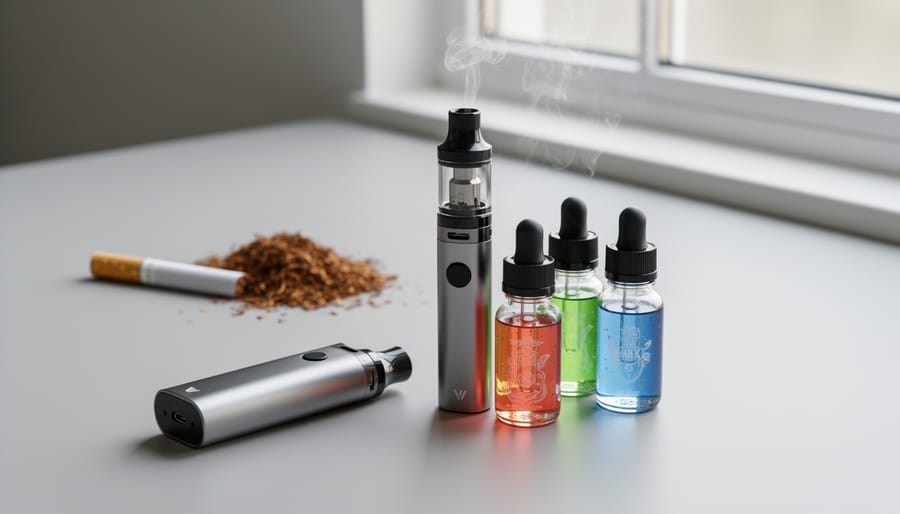
Vaping refers to inhaling aerosol produced by an electronic cigarette or similar device. Unlike traditional cigarettes that burn tobacco, e-cigarettes heat a liquid solution to create vapor, which is why the process avoids combustion entirely.
E-cigarettes come in various forms, from small pod systems to larger mod devices, but they all work on the same basic principle. A battery powers a heating element (called an atomizer or coil) that heats e-liquid stored in a tank or cartridge. When heated to around 200-250°C, the liquid transforms into an aerosol that users inhale. This process is fundamentally different from smoking because nothing burns, meaning no smoke, ash, or many of the combustion byproducts that make cigarettes particularly dangerous.
The e-liquid itself typically contains four main ingredients. Propylene glycol and vegetable glycerin form the base, creating the vapor and carrying flavor. Nicotine is added in varying concentrations, from zero to high strengths that match cigarette levels. Flavorings give each e-liquid its taste, ranging from tobacco and menthol to fruit and dessert options. Some specialty liquids work differently, like how CBD vaping works with cannabidiol instead of nicotine.
The result is vapor, not smoke, which contains far fewer chemicals than cigarette smoke.
What Is Cigarette Smoking?
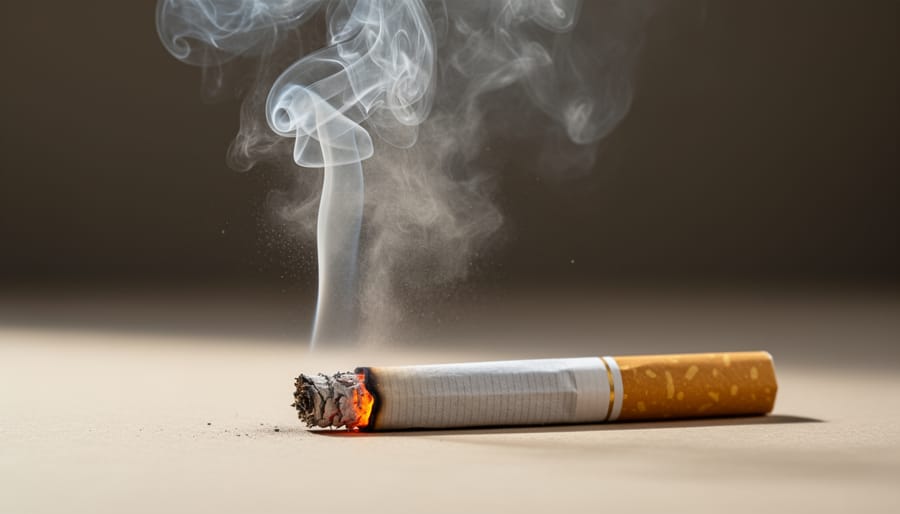
Cigarette smoking involves igniting and inhaling the smoke from tobacco products wrapped in paper. When you light a cigarette, combustion occurs, tobacco burns at temperatures exceeding 600°C, creating smoke that contains a complex mixture of toxic substances.
This combustion process is what makes cigarettes uniquely harmful. The burning tobacco doesn’t just release nicotine; it generates tar, a sticky residue that coats the lungs and airways. Carbon monoxide, the same poisonous gas found in car exhaust, enters your bloodstream with every puff, reducing your blood’s ability to carry oxygen.
The true scope of cigarette smoke’s chemical complexity is staggering. Research has identified 7,000-plus chemicals and 70 carcinogens in tobacco smoke, including formaldehyde, arsenic, benzene, and polonium-210 (a radioactive element).
Many of these chemicals form specifically through combustion, they’re not present in the tobacco leaf itself but are created when organic material burns. This includes heavy metals, volatile organic compounds, and reactive oxidants that damage cells throughout your body.
The delivery system matters as much as the nicotine. Each cigarette draws this chemical cocktail deep into your lungs roughly ten to twelve times, exposing delicate lung tissue to sustained harm. This repeated exposure to combustion byproducts drives the well-documented health consequences that make smoking the leading preventable cause of death worldwide.
Safety Comparison: Key Health Dimensions
Chemical Exposure and Toxicity
When tobacco burns in a cigarette, it produces over 7,000 distinct chemicals, with at least 70 classified as carcinogens. These include formaldehyde, benzene, arsenic, and polycyclic aromatic hydrocarbons, compounds formed specifically through combustion. Tar, the sticky residue coating smokers’ lungs, carries many of these toxins directly into respiratory tissue. Carbon monoxide, another combustion byproduct, displaces oxygen in the bloodstream and strains cardiovascular function.
Vaping eliminates combustion entirely. E-cigarette vapor contains a fraction of the chemicals found in smoke, typically dozens rather than thousands. Research shows significantly lower toxicant biomarkers in vaping users compared to smokers, indicating reduced exposure to harmful compounds. The tar, carbon monoxide, and combustion-generated carcinogens present in cigarettes are absent from vapor.
That doesn’t mean vapor is harmless. E-liquids contain propylene glycol and vegetable glycerin, which break down into smaller molecules when heated. Some flavorings produce trace amounts of formaldehyde or acrolein at high temperatures. Certain flavor compounds, like diacetyl (used for buttery notes), have raised respiratory concerns. Metal particles from heating coils can appear in vapor at detectable levels.
The critical distinction is scale and severity. While vaping introduces some chemical exposure, the types and concentrations are substantially lower than what cigarettes deliver. Combustion fundamentally transforms tobacco into a far more dangerous chemical cocktail than heated e-liquid produces.
Respiratory and Cardiovascular Impact
Smoking’s impact on your lungs and heart is severe and well-documented. Tar coats airways with each cigarette, trapping toxins and gradually destroying the delicate tissues that allow you to breathe. Over time, this damage becomes permanent. Smoking leads to COPD risk a progressive disease that makes breathing increasingly difficult and has no cure. Carbon monoxide from cigarettes also replaces oxygen in your blood, forcing your heart to work harder and accelerating arterial damage that leads to heart disease and stroke.
Vaping eliminates combustion entirely, which means no tar and no carbon monoxide. Your lungs aren’t being coated with sticky residue, and your blood carries oxygen normally. Early studies show former smokers who switch to vaping experience measurable improvements in lung function and cardiovascular markers within months. However, vaping isn’t without respiratory concerns. Some e-liquid ingredients, particularly certain flavorings, can irritate airways. Cases of lung injury linked to black market THC products in 2019 highlighted contamination risks, though regulated nicotine vaping products weren’t implicated.
The cardiovascular picture is more complex. Nicotine itself, present in both, temporarily raises heart rate and blood pressure. But smoking’s additional toxins cause lasting arterial stiffening and plaque buildup that nicotine alone doesn’t produce. Research suggests vaping carries considerably lower cardiovascular risk than smoking, though it’s not risk-free for people with existing heart conditions.
Cancer Risk
Cigarette smoking is definitively linked to at least 15 different types of cancer, including lung, throat, mouth, esophageal, bladder, pancreatic, and stomach cancers. The combustion of tobacco produces over 70 known carcinogens, cancer-causing substances like benzene, formaldehyde, arsenic, and polonium-210, that directly damage cellular DNA and trigger malignant transformations. Lung cancer risk alone is about 15 to 30 times higher in smokers than non-smokers, and smoking accounts for roughly 85% of all lung cancer cases.
Vaping eliminates tobacco combustion entirely, which removes the primary source of these carcinogens. E-cigarette vapor contains far fewer toxic compounds and at dramatically reduced concentrations compared to cigarette smoke. While some carcinogens like formaldehyde can form when e-liquid is heated to excessively high temperatures, the levels remain orders of magnitude lower than those in smoke.
The crucial caveat is time. Because vaping has only been widespread for about 15 years, we lack the decades-long epidemiological data needed to establish definitive cancer risk profiles. Cancer typically develops over 20 to 30 years of exposure, so the full picture won’t emerge until current vapers age. However, biomarker studies measuring DNA damage and carcinogen metabolites in vapers show significantly lower levels than in smokers, suggesting substantially reduced cancer risk, though not zero risk. No credible researcher claims vaping is completely safe, but current evidence points toward far lower carcinogenic potential than smoking.
Addiction Potential
Both vaping and smoking deliver nicotine, but their addiction profiles differ primarily in how quickly nicotine reaches your brain. Cigarettes deliver nicotine rapidly, typically within 10-20 seconds of inhalation, creating an immediate dopamine spike that reinforces addiction. This speed of delivery is a key factor in cigarettes’ highly addictive nature.
Vaping devices vary more widely. Pod systems and high-nicotine e-liquids (especially nicotine salts) can match cigarettes’ rapid delivery, making them similarly addictive. Lower-nicotine e-liquids with standard freebase nicotine typically deliver nicotine more gradually, which may reduce the immediate reinforcement effect but doesn’t eliminate addiction risk.
Both products allow users to self-titrate, adjusting their intake to maintain nicotine levels, which sustains dependence. The behavioral rituals surrounding each (the hand-to-mouth motion, breaks, social contexts) also reinforce psychological addiction beyond the chemical component. While switching from smoking to vaping often replaces one nicotine source with another rather than eliminating addiction, some users find it easier to gradually reduce nicotine concentration in e-liquids than to cut down on cigarettes. If you’re exploring different vaping options for other purposes, such as vaping CBD safely understand that nicotine-free products eliminate this addiction pathway entirely.
Secondhand Exposure Risks
Secondhand cigarette smoke poses well-documented health risks because it contains the same toxic mix of tar, carbon monoxide, and carcinogens that smokers inhale. Non-smokers exposed to secondhand smoke face increased risks of heart disease, lung cancer, and respiratory infections, with particularly serious effects on children and pregnant women.
Secondhand vapor from e-cigarettes differs significantly in composition. While not completely harmless, it contains substantially fewer toxic chemicals and at much lower concentrations than cigarette smoke. Research shows secondhand vapor dissipates more quickly and doesn’t produce the persistent residue that tobacco smoke leaves on surfaces.
Current evidence suggests secondhand vapor exposure carries considerably lower health risks than secondhand smoke. However, indoor vaping still releases nicotine and fine particles into the air, which may affect sensitive individuals, particularly those with asthma or respiratory conditions. Most public health authorities recommend avoiding both around children and non-users, though they acknowledge the risk reduction when vapers replace smoking entirely. The lack of combustion in vaping eliminates the most harmful components of secondhand exposure, but it doesn’t mean the vapor is entirely inert.
Known Long-Term Health Outcomes
The evidence gap between smoking and vaping couldn’t be starker. We have over 70 years of comprehensive research documenting smoking’s devastating long-term effects: lung cancer, chronic obstructive pulmonary disease, heart disease, stroke, and at least a dozen other cancers. These outcomes are definitively established through decades of longitudinal studies tracking millions of smokers.
Vaping, by contrast, emerged commercially in the mid-2000s, meaning we have roughly 15-20 years of real-world use data at most. No long-term studies have tracked vapers for the 30-50 year periods that revealed smoking’s full mortality profile. Current cohort studies suggest substantially lower disease rates among vapers compared to smokers, but researchers consistently emphasize we’re still in the early stages of understanding vaping’s true long-term impact. The absence of evidence isn’t evidence of absence, it simply reflects vaping’s shorter history.
Who Should Choose Vaping vs. Smoking (Or Neither)

The decision between vaping, smoking, or avoiding both entirely depends on your current situation and health goals. While the evidence shows vaping is substantially less harmful than smoking, neither option is risk-free, and the ideal choice for most people remains using neither.
Current smokers face the clearest case for switching. If you’re already smoking cigarettes and have struggled to quit through other methods, transitioning to vaping represents significant harm reduction. You’ll eliminate exposure to tar, carbon monoxide, and thousands of combustion chemicals while still managing nicotine dependence. Many smokers find this switch easier than quitting cold turkey, and it provides a pathway toward eventually reducing nicotine altogether. The key consideration here is commitment to full replacement, dual use (both smoking and vaping) reduces the harm reduction benefit.
For non-smokers and young adults, neither option makes sense. Starting to vape introduces nicotine addiction and potential health risks without any harm reduction benefit. If you’ve never smoked, you’re not reducing anything, you’re adding risk. This applies regardless of whether you’re curious about flavors or interested in social aspects. Much like choosing between an an anxiety pen vs vape requires understanding your specific needs, deciding whether to start vaping requires honest assessment of whether you’re addressing an existing problem or creating a new one.
Specific groups should avoid both entirely:
– Pregnant individuals or those planning pregnancy, as nicotine affects fetal development regardless of delivery method
– People under 18, whose developing brains are particularly vulnerable to nicotine’s effects
– Individuals with existing respiratory conditions like asthma or COPD, who may experience symptom worsening from either option
– Anyone with cardiovascular disease, as nicotine raises heart rate and blood pressure
– People who have successfully quit nicotine, who risk relapsing into dependence
The ultimate goal remains complete cessation. Even if you switch from smoking to vaping, view it as a step in your journey rather than the destination. Work with your healthcare provider on a reduction plan. Consider gradually decreasing nicotine strength in your e-liquids, then tapering device use. Many find that vaping’s flexibility makes this stepdown easier than with cigarettes’ fixed nicotine delivery.
Understanding which device fits your harm reduction goals matters, but recognizing when the best choice is neither option matters more. Your doctor can provide personalized guidance based on your health history, current habits, and cessation goals.
What Each Option Is
Vaping and smoking both deliver nicotine, but they work in fundamentally different ways. Understanding these differences is essential when evaluating their comparative safety.
Vaping uses battery-powered electronic devices to heat a liquid (e-liquid or vape juice) until it becomes an aerosol that users inhale. This liquid typically contains nicotine extracted from tobacco, propylene glycol, vegetable glycerin, and flavorings. The process creates vapor without burning anything, there’s no combustion, no flame, and no smoke. Devices range from disposable pens to refillable tank systems, but all operate on the same basic principle of heating rather than burning. If you’re considering vaping for therapeutic purposes, consult a comprehensive safety guide first.
Cigarette smoking involves lighting and burning dried tobacco leaves wrapped in paper. When tobacco combusts at high temperatures (around 900°C at the burning tip), it produces smoke containing tar, carbon monoxide, and thousands of chemical compounds. Smokers inhale this smoke directly into their lungs. The combustion process is what generates the majority of harmful substances in cigarette smoke, many of which are completely absent from vapor.
Common Questions About Vaping Safety Compared to Smoking
Is vaping really 95% safer than smoking?
This figure comes from a 2015 Public Health England report that estimated vaping is around 95% less harmful than smoking based on expert analysis of available evidence. While this remains a reasonable estimate of comparative risk, it’s important to understand that vaping still carries some health risks, it’s not 95% safe in absolute terms, but rather substantially less harmful than combustible cigarettes.
Can switching to vaping help me quit smoking completely?
Many smokers have successfully used vaping as a transition tool to quit smoking, and some studies suggest it may be more effective than traditional nicotine replacement therapies when combined with behavioral support. However, the goal should ultimately be to stop all nicotine use rather than simply switching from one delivery method to another indefinitely.
What about “popcorn lung”, is that a real risk from vaping?
Popcorn lung (bronchiolitis obliterans) was linked to diacetyl, a flavoring chemical found in some e-liquids, though it’s now banned or avoided by most reputable manufacturers. Importantly, traditional cigarettes contain diacetyl at levels 100 times higher than e-cigarettes ever did, yet smoking-related popcorn lung is extremely rare, suggesting this specific risk has been overstated in vaping contexts.
Is vaping safe for people who don’t currently smoke?
No, vaping is not recommended for non-smokers, non-nicotine users, or young people. The harm reduction benefit only applies to current smokers switching away from combustible tobacco; introducing nicotine to your system when you’re not already addicted creates unnecessary health risks and potential for addiction.
Understanding the comparative vaping effects versus smoking requires looking at both what we know definitively and what remains under investigation. The scientific consensus holds that vaping eliminates the most dangerous aspect of cigarette smoking, combustion and the resulting tar and thousands of toxic chemicals. This fundamental difference drives the harm reduction argument.
That said, vaping’s relatively short history means we lack the decades of longitudinal data that conclusively demonstrated smoking’s devastating health impacts. Current evidence points toward significantly reduced risk, but “less harmful” doesn’t equal “harmless.” Adolescents face particular concerns because nicotine exposure during brain development can affect attention, learning, and impulse control, while potentially priming the brain for other substance addictions, making vaping especially inappropriate for teens regardless of the comparison to cigarettes.
The most important takeaway remains that neither option is ideal. If you don’t smoke, don’t start vaping. If you do smoke, switching to vaping may substantially reduce your health risks, but working toward complete cessation offers the best outcome for your long-term health.
Key Terms to Know
Understanding the technical terms used in discussions about vaping and smoking helps you make sense of research findings and health information. Here are the key concepts that appear throughout safety comparisons.
- Carcinogen
- A substance capable of causing cancer in living tissue. Cigarette smoke contains over 70 known carcinogens, while e-cigarette vapor contains significantly fewer.
- Combustion
- The process of burning that occurs when tobacco is lit, producing smoke through chemical reactions at high temperatures. Vaping eliminates combustion by heating liquid instead of burning plant material.
- E-liquid (Vape Juice)
- The fluid used in vaping devices, typically containing propylene glycol, vegetable glycerin, flavorings, and often nicotine. It’s heated to create vapor rather than burned.
- Nicotine
- The addictive stimulant naturally found in tobacco and often included in e-liquids. While addictive, nicotine itself is not the primary cause of smoking-related diseases.
- Tar
- The sticky residue produced by burning tobacco that coats the lungs and contains many harmful chemicals. Vaping produces no tar because it involves no combustion.
- Toxicant
- A poisonous substance that can cause harm to living organisms. Both cigarette smoke and e-cigarette vapor contain toxicants, but at vastly different concentrations.
- Vaporization
- The process of converting liquid into vapor through heating without combustion. This method produces fewer harmful byproducts than burning tobacco.
- COPD (Chronic Obstructive Pulmonary Disease)
- A group of progressive lung diseases including emphysema and chronic bronchitis that obstruct airflow. Smoking is the leading cause, responsible for about 85-90% of COPD cases.
- Harm Reduction
- A public health strategy that aims to minimize negative health consequences rather than requiring complete abstinence. Switching from cigarettes to vaping is considered a harm reduction approach for smokers unable or unwilling to quit nicotine entirely.
These terms form the foundation for understanding comparative safety research. When you encounter them in studies or health discussions, you can now interpret the information more accurately and evaluate claims about the relative risks of vaping versus smoking with greater clarity.
The evidence is clear: vaping carries substantially fewer health risks than smoking traditional cigarettes. For current smokers, switching to vaping represents meaningful harm reduction, potentially lowering exposure to thousands of toxic chemicals and carcinogens found in cigarette smoke. That said, reduced risk doesn’t mean zero risk, and vaping isn’t harmless.
If you don’t currently smoke or vape, the safest choice is staying that way. Neither option is risk-free, and introducing nicotine into your life when you don’t already use it offers no health benefits. For current smokers, however, the calculus shifts. When complete cessation feels out of reach, vaping offers a lower-risk alternative that’s helped many people step away from combustible tobacco.
The research landscape continues evolving. What we know today about vaping’s long-term effects will expand as more longitudinal studies conclude. Stay informed, follow emerging evidence, and recognize that public health guidance may shift as new data surfaces.
Your health circumstances are unique. If you’re considering switching from cigarettes to vaping or have concerns about either, talk with your healthcare provider. They can assess your specific situation, discuss your options, and help you make the choice that best serves your health goals.