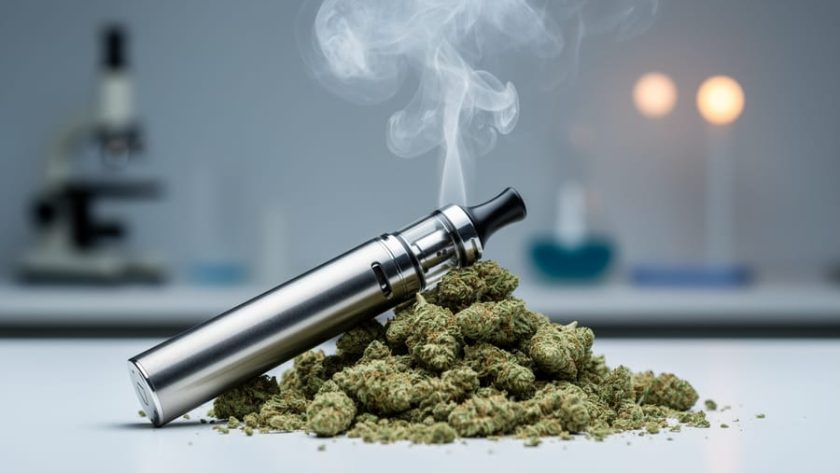
THCa decarboxylation vaping is the process of heating tetrahydrocannabinolic acid (THCa) to convert it into psychoactive THC through controlled heat in a vaping device. This chemical transformation occurs when raw cannabis compounds are exposed to temperatures between 220°F and 450°F, breaking off a carboxyl group and activating the cannabinoid’s intoxicating properties.
Understanding this process matters because vaping has become one of the most efficient methods to decarboxylate THCa while maintaining precise temperature control. The Exhale Wellness THCA vape guide covers the top devices that optimize this conversion. Unlike smoking, which applies inconsistent, often excessive heat, or edibles, which require lengthy oven decarboxylation, vaping devices allow users to activate THCa on demand with minimal waste.
The science behind decarboxylation isn’t just academic. It directly impacts your experience, efficiency, and product selection. Get the temperature wrong and you’ll either fail to activate the compound or destroy valuable cannabinoids and terpenes through combustion. Choose the right device and you can customize your activation rate, preserve flavor profiles, and maximize bioavailability.
This guide breaks down exactly what happens at the molecular level during vaping, which device categories handle decarboxylation best, practical applications for different user needs, and critical safety and legal considerations as regulations continue evolving through 2026. Whether you’re new to THCa products or optimizing your current setup, you’ll learn how heat, time, and equipment choices determine your results.
What THCa Is and Why It Needs Decarboxylation
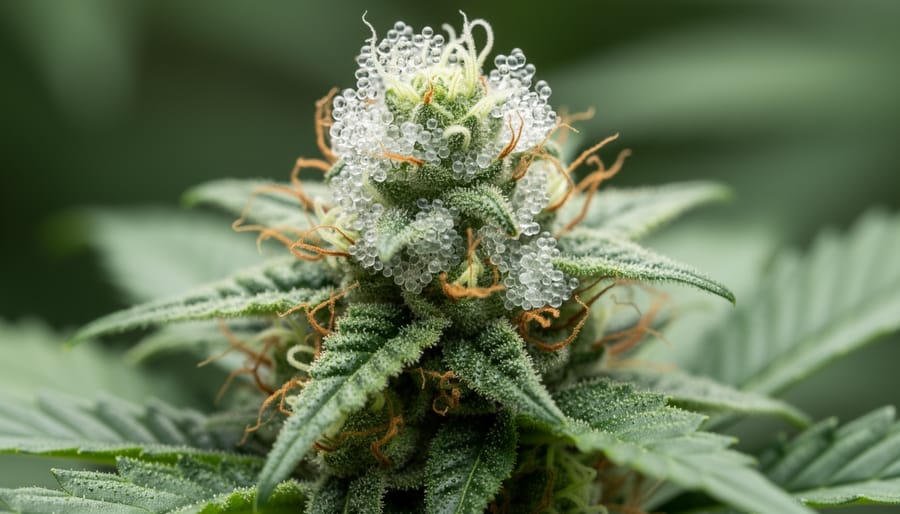
THCa, tetrahydrocannabinolic acid, is a cannabinoid compound found abundantly in fresh, unheated cannabis plants. If you’ve ever handled raw cannabis flower or juice, you’ve encountered THCa. It’s the dominant cannabinoid in living plants, making up as much as 15-30% of flower weight in potent strains. But here’s the catch: THCa won’t get you high.
The reason comes down to molecular structure. THCa carries an extra carboxyl group (a cluster of carbon, oxygen, and hydrogen atoms) attached to its molecule. This additional molecular component changes how the compound interacts with your body’s endocannabinoid system. Specifically, THCa doesn’t fit neatly into the CB1 receptors in your brain that produce the psychoactive effects associated with cannabis. It’s like having a key that’s slightly the wrong shape for the lock.
- THCa
- Tetrahydrocannabinolic acid, the raw precursor cannabinoid found in fresh cannabis that does not produce intoxicating effects. It becomes THC when heated.
- THC
- Tetrahydrocannabinol, the psychoactive cannabinoid responsible for the “high” associated with cannabis. It’s created when THCa loses its carboxyl group through heat.
- Decarboxylation
- The chemical process where heat removes a carboxyl group (CO₂) from cannabinoid acids, converting them into their active forms. This transformation is essential for activating THCa’s psychoactive properties.
- Cannabinoid Acids
- The raw, acidic forms of cannabinoids found in living cannabis plants, including THCa, CBDa, and CBGa. They require heat to convert into their neutral, bioavailable counterparts.
When you apply heat, whether through vaping, smoking, or cooking, you trigger decarboxylation. This reaction breaks off that carboxyl group as carbon dioxide, leaving behind THC in its familiar, psychoactive form. The transformation is irreversible. Once that molecular change happens, THC can bind effectively to your brain’s receptors and produce the effects users seek. Without heat, THCa remains largely inert in terms of intoxication, though it may offer its own set of therapeutic properties that researchers continue to explore.
How Decarboxylation Works When Vaping THCa
Temperature and Time Variables
Decarboxylation isn’t a single-point event, it’s a process that unfolds differently across a temperature spectrum. At 220°F (105°C), the lower threshold for vaping THCa, conversion happens gradually over several minutes. This slow pace risks incomplete decarboxylation during a typical vaping session, leaving some THCa unconverted and reducing potency.
Raise the temperature to 315-350°F (157-177°C), the sweet spot for most dry herb vaporizers, and decarboxylation accelerates significantly. You’ll achieve 80-90% conversion within seconds of inhalation, maximizing THC availability. Push beyond 390°F (199°C), and you get near-instant, complete conversion, but at a cost.
Higher temperatures degrade delicate terpenes like limonene and pinene, which start evaporating around 310-350°F. These compounds aren’t just responsible for aroma; they influence effects through the entourage effect. Vaping at 430°F (221°C) or above may convert all available THCa, but you’ll lose the nuanced flavor profile and potentially some of the therapeutic benefits terpenes provide.
The practical balance? Most experienced users target 350-385°F (177-196°C) for efficient decarboxylation while retaining a meaningful terpene profile. Lower temperatures favor flavor and a gentler effect; higher ones prioritize potency and vapor density.
Why Vaping Enables Controlled Decarboxylation
Vaping’s primary advantage lies in its ability to maintain consistent temperatures within the precise range needed for decarboxylation, typically 220-250°F. Unlike combustion, which spikes to 1,400°F or higher and destroys cannabinoids instantly, vaping devices regulate heat electronically to stay in the sweet spot where THCa converts efficiently without burning.
This controlled environment means decarboxylation happens in real time as you draw vapor. When you inhale, heated air passes through the THCa material at your selected temperature, triggering conversion on contact. You’re not waiting for an oven to process an entire batch or guessing whether a flame has overheated your product, the transformation occurs precisely when and where you want it.
Most quality vaporizers let you adjust temperature in single-degree increments, giving you direct control over conversion speed and cannabinoid preservation. Lower temperatures (around 220°F) produce slower, more gradual decarboxylation that protects delicate terpenes, while higher settings (approaching 250°F) maximize THC conversion. Combustion offers no such adjustability, it’s all-or-nothing heat that wastes active compounds through thermal destruction.
Types of Vaping Devices for THCa Decarboxylation
Dry Herb Vaporizers
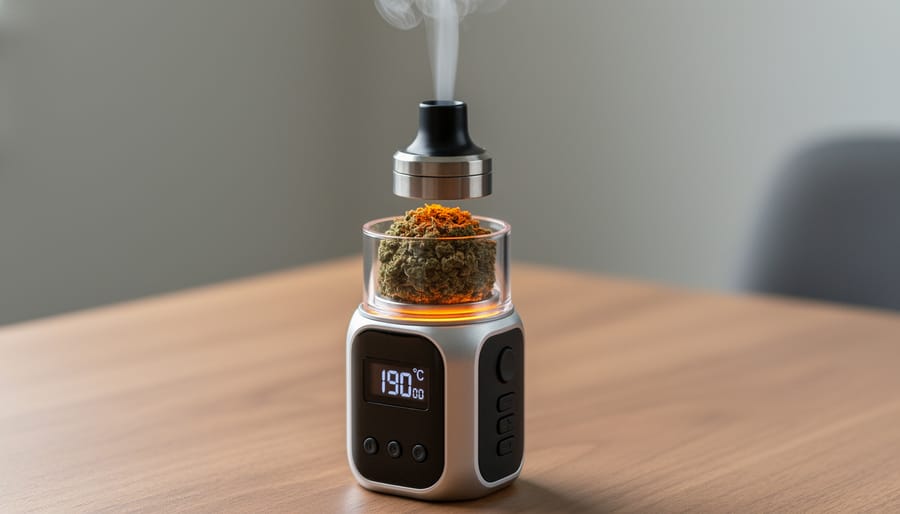
Dry herb vaporizers heat raw cannabis flower to temperatures that convert THCa into active THC without combustion. These devices fall into two main categories based on their heating method.
Conduction vaporizers heat the flower through direct contact with a hot surface, typically a metal or ceramic oven chamber. They reach temperature quickly and cost less, but can create hot spots that lead to uneven decarboxylation. You’ll need to stir the flower mid-session for consistent results.
Convection vaporizers pass heated air through the flower instead. This indirect method produces more uniform decarboxylation across the entire load and preserves terpenes better, though these devices typically cost more and take longer to heat up.
Most quality dry herb vapes let you set precise temperatures between 350-430°F (175-220°C). For efficient THCa decarboxylation while maintaining flavor, aim for 365-385°F (185-196°C). Higher settings convert faster but may degrade terpenes and produce harsher vapor.
Concentrate and Dab Vaporizers
Concentrate and dab vaporizers are purpose-built for THCa-rich extracts like crystalline, diamonds, sauce, and other concentrates that require higher temperatures than flower. These devices typically feature ceramic, quartz, or titanium heating elements that can reach 350-600°F, well above the 220-250°F minimum needed for decarboxylation but essential for vaporizing the full spectrum of cannabinoids and terpenes in concentrated forms.
Electronic dab rigs (e-rigs) offer precise digital temperature control, letting you dial in the exact heat for optimal conversion without combustion. Portable concentrate pens provide convenience but often lack fine temperature adjustment, operating at preset ranges that may run hotter than ideal. Dab straws and nectar collectors work through direct contact heating, though temperature consistency varies with technique.
The advantage of concentrate vaporizers for THCa is efficiency: you’re working with products that are 70-99% cannabinoid content, so each session delivers potent effects with minimal material. The trade-off is a steeper learning curve around proper loading, temperature selection, and maintenance compared to simpler cartridge systems.
Cartridge and Pod Systems
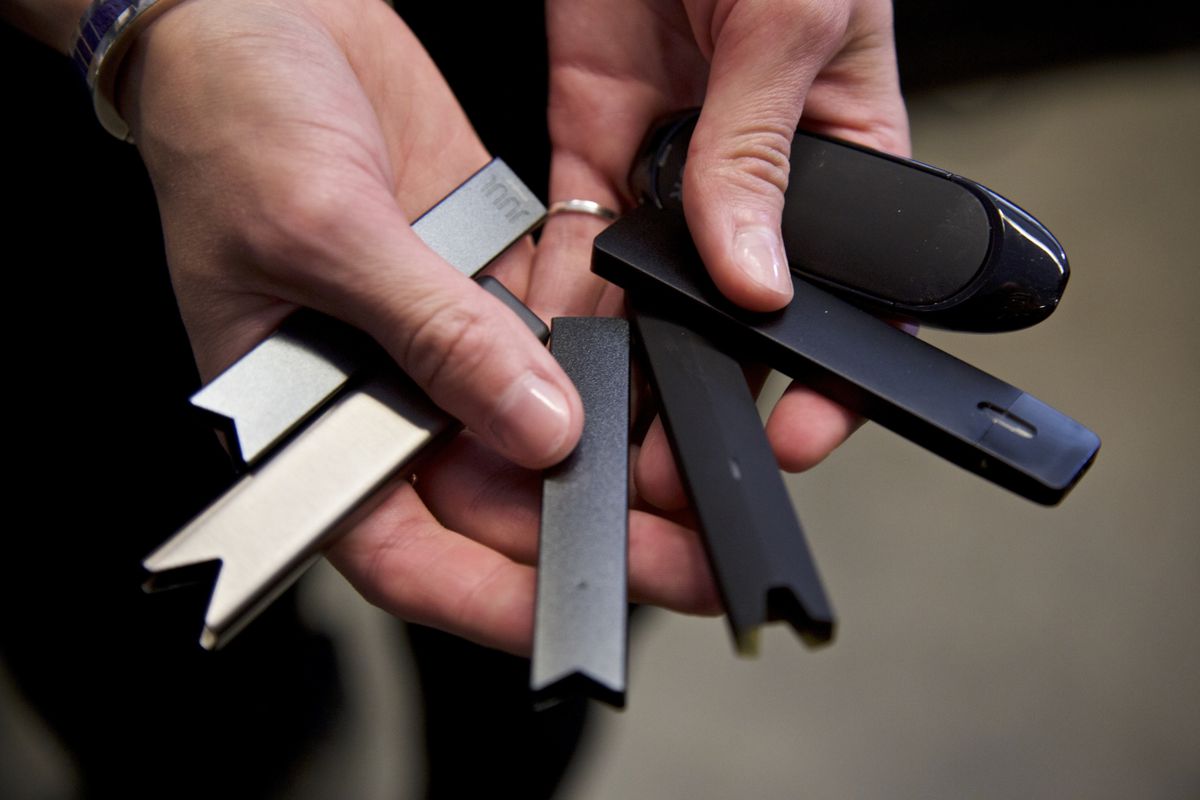
Cartridge and pod systems represent the most convenient entry point for THCa vaping, though they sacrifice some control compared to dedicated vaporizers. These devices use pre-filled cartridges containing THCa distillate or extract, or refillable pods you load yourself with concentrate. The battery heats a ceramic or metal coil that vaporizes the oil at preset temperatures, typically between 400-450°F.
Pre-filled cartridges offer foolproof simplicity, you screw them onto a compatible battery and inhale. The trade-off is limited temperature adjustment and reliance on the manufacturer’s formulation quality. Refillable pod systems give you product choice and cost savings but require more maintenance.
Most cartridge batteries lack precise temperature control, using voltage settings instead. Lower voltages (2.4-2.8V) preserve flavor and ensure gentler decarboxylation, while higher settings (3.2-3.7V) produce bigger clouds but may degrade terpenes. The convenience makes cartridges popular for discreet, on-the-go use, but serious users often prefer devices with more granular temperature control.
Practical Applications and Uses of THCa Vaping
Users turn to THCa vaping for several distinct purposes, each taking advantage of the controlled decarboxylation process. The on-demand conversion appeals to those who want precise dosing and rapid effects without the extended onset time of edibles, typically feeling effects within minutes rather than waiting 60-90 minutes for digestion and liver metabolism.
Medical and therapeutic users often choose vaping for symptom management that requires quick relief. Common applications include:
- Pain management for chronic conditions or acute flare-ups
- Anxiety relief and stress reduction
- Appetite stimulation for those undergoing treatments
- Nausea control and digestive support
- Sleep aid without the delayed effects of oral consumption
The bioavailability advantage matters here, vaping delivers roughly 50-60% of cannabinoids to your bloodstream compared to 10-20% with edibles, meaning smaller amounts produce comparable effects. Those exploring cannabinoid therapy might reference vaping CBD basics for broader context on non-intoxicating applications.
Recreational users value the experience quality vaping provides. Lower temperatures preserve terpene profiles that would burn off during smoking, maintaining the strain’s distinctive flavors and aromatics. This matters because terpenes contribute to the entourage effect, the synergistic interaction between cannabinoids and aromatic compounds that shapes the overall experience.
Microdosing has become particularly popular with THCa vaping. Users can take controlled, small draws throughout the day to maintain baseline effects without overconsumption. The immediate feedback lets you stop once you’ve reached the desired effect rather than overshooting with an edible dose you can’t reverse.
Some users specifically seek the focused clarity that comes from fresh decarboxylation. They report different subjective effects compared to pre-decarboxylated products, though scientific research on this distinction remains limited. Those considering any cannabinoid use should understand potential mental health effects and consult healthcare providers when relevant.
Efficiency and Effectiveness: What to Expect
When you vape THCa, you’re working with a conversion process that rarely reaches 100% efficiency. Most quality vaporizers achieve 70-90% decarboxylation rates under optimal conditions, meaning a portion of your THCa will remain unconverted. This isn’t necessarily a shortcoming, it’s the realistic performance ceiling of portable heating technology working with complex organic compounds.
Device quality makes the biggest difference in conversion rates. Budget vaporizers with inconsistent heating elements may fluctuate 20-30 degrees from their displayed temperature, causing incomplete decarboxylation in cooler spots and potential degradation in hotter zones. Premium devices with accurate temperature sensors and even heat distribution push closer to that 90% mark. The heating method matters too: convection vaporizers generally outperform conduction models because hot air flows through the material uniformly rather than relying on direct contact with heated surfaces.
Your draw technique directly impacts efficiency. A slow, steady proper vape inhale lasting 3-5 seconds gives the heat time to penetrate the material thoroughly. Quick, shallow puffs don’t allow sufficient contact time for complete molecular conversion, leaving active THCa behind. With concentrates, pre-heating the chamber for 5-10 seconds before drawing can significantly improve conversion rates.
Product freshness and storage affect starting conditions. Degraded or improperly stored THCa may have already begun converting or oxidizing, reducing the available material for clean decarboxylation. Fresh, properly sealed THCa products stored in cool, dark conditions yield more predictable results. Testing your products helps, lab reports showing total THC (THCa + existing THC) give you baseline numbers to gauge your device’s real-world performance.
Legal and Safety Considerations for 2026
THCa’s legal status in 2026 remains complex and varies significantly by jurisdiction. Because THCa is the non-intoxicating precursor to THC, some regions classify it differently than delta-9 THC itself, creating a legal gray area that consumers must navigate carefully. In the United States, the 2018 Farm Bill’s hemp provisions have led some states to treat hemp-derived THCa as federally compliant, while others regulate it identically to marijuana. International laws differ even more dramatically, with some countries permitting THCa products under specific conditions and others prohibiting all cannabis derivatives regardless of psychoactive potential.
Before purchasing or vaping any THCa product, verify your local regulations. Laws can shift quickly, and what’s legal at the state level may conflict with municipal ordinances or federal enforcement priorities. Licensed dispensaries and retailers should clearly display compliance certificates and product testing results.
Safety practices are equally critical. The vaping health crisis of 2019 underscored that black market cartridges pose serious risks, and that threat hasn’t disappeared. Always prioritize tested products from licensed sources:
- Verify third-party lab testing for contaminants, pesticides, and potency
- Check current local and state laws before purchasing THCa products
- Buy only from licensed dispensaries or verified retailers
- Inspect hardware quality, avoid cheap, unmarked devices with unknown materials
- Start with low temperatures (220°F) and increase gradually
While some studies suggest vaping may be safer than smoking traditional methods, risks remain. Keep products securely stored away from minors, concerns about kids and marijuana access continue to shape regulations. Never modify cartridges, and discard any product with unusual color, smell, or consistency.
Frequently Asked Questions
Does all THCa convert to THC when vaping?
No, typical vaping achieves 70-90% conversion depending on device temperature accuracy, draw speed, and how long the material stays heated. Some THCa will always remain unconverted, especially with quick draws or lower temperatures.
Can you vape pure THCa crystals?
Yes, THCa crystalline or diamonds can be vaped in concentrate devices or dab pens designed for high temperatures. You’ll need a device rated for concentrates since crystals require more heat than flower.
What temperature is best for decarboxylation?
The sweet spot sits between 220-250°F (105-120°C) for efficient conversion while preserving terpenes. Lower temps take longer to convert, while higher temps speed the process but may degrade flavor compounds.
How does vaping compare to smoking for decarboxylation?
Vaping offers more controlled, efficient conversion at lower temperatures, preserving more cannabinoids and terpenes. Smoking reaches combustion temperatures above 400°F, which fully decarboxylates THCa but destroys many beneficial compounds in the process.
Does decarboxylation destroy other cannabinoids?
Properly controlled decarboxylation shouldn’t destroy other cannabinoids, though excessive heat can degrade them. Vaping at optimal temperatures converts THCa without significantly affecting CBD, CBG, or minor cannabinoids present in your product.
These questions reflect what most users wonder when first learning about THCa vaping. The conversion efficiency matters because it affects how much product you need and what effects you’ll experience. Understanding that complete conversion isn’t guaranteed helps set realistic expectations and explains why technique and equipment quality make a tangible difference in your results.
Temperature choice represents a practical trade-off. Going too low means incomplete conversion and weaker effects, while excessive heat wastes your product through degradation. Most experienced users find their preferred temperature within that 220-250°F range based on whether they prioritize maximum potency or fuller flavor profiles.
Vaping THCa offers a uniquely controlled method for converting this non-intoxicating cannabinoid into psychoactive THC through precise heat application. Unlike smoking or edibles, vaping provides real-time decarboxylation at optimal temperatures, typically yielding 70-90% conversion efficiency while preserving valuable terpenes and cannabinoids that contribute to flavor and effects.
The bioavailability advantage is significant. Inhaled cannabinoids enter your bloodstream within minutes, allowing for immediate effects and easier dose titration compared to oral consumption. This makes vaping particularly appealing for both therapeutic users seeking consistent relief and recreational consumers who value control over their experience.
Success hinges on three factors: investing in quality vaping devices with accurate temperature controls, maintaining proper heating ranges (220-250°F for most applications), and sourcing tested products from reputable suppliers. As 2026 continues to bring regulatory changes across different jurisdictions, staying informed about local THCa and THC laws remains essential.
The landscape continues evolving. Manufacturers are developing more sophisticated temperature-control systems, and regulatory frameworks are adapting to distinguish between THCa products and fully activated THC formulations. For anyone exploring this method, combining technical understanding with practical safety measures delivers the best results.